
Light demolition in Denver provides a precise approach to interior deconstruction, enabling homeowners and businesses to remove non-structural elements safely and efficiently. Understanding when and why you need professional light demolition with Movely empowers property owners across Denver, Aurora, Parker, Englewood, Castle Rock, Boulder, and Littleton to achieve renovation goals without delays or hidden costs. This guide covers what light demolition entails, when to hire experts, cost factors, the step-by-step process, residential and commercial service options, permit requirements, eco-friendly debris removal, and answers common questions about demolition for remodel and junk removal and demolition.
What Is Light Demolition and How Does It Differ from Heavy Demolition?
Light demolition involves the targeted removal of non-load-bearing components—such as drywall, flooring, cabinets, and small structures—to prepare spaces for renovation or cleanout. Unlike heavy demolition, which uses large machinery to dismantle structural walls, foundations, and large-scale concrete or steel elements, selective deconstruction minimizes disruption, dust, and noise.
Movely’s local expertise across multiple Colorado communities ensures that selective interior demolition meets all regional guidelines. For details on our service coverage, visit our Service Areas – Movely to confirm availability in your city.
What Types of Projects Are Considered Light Demolition?
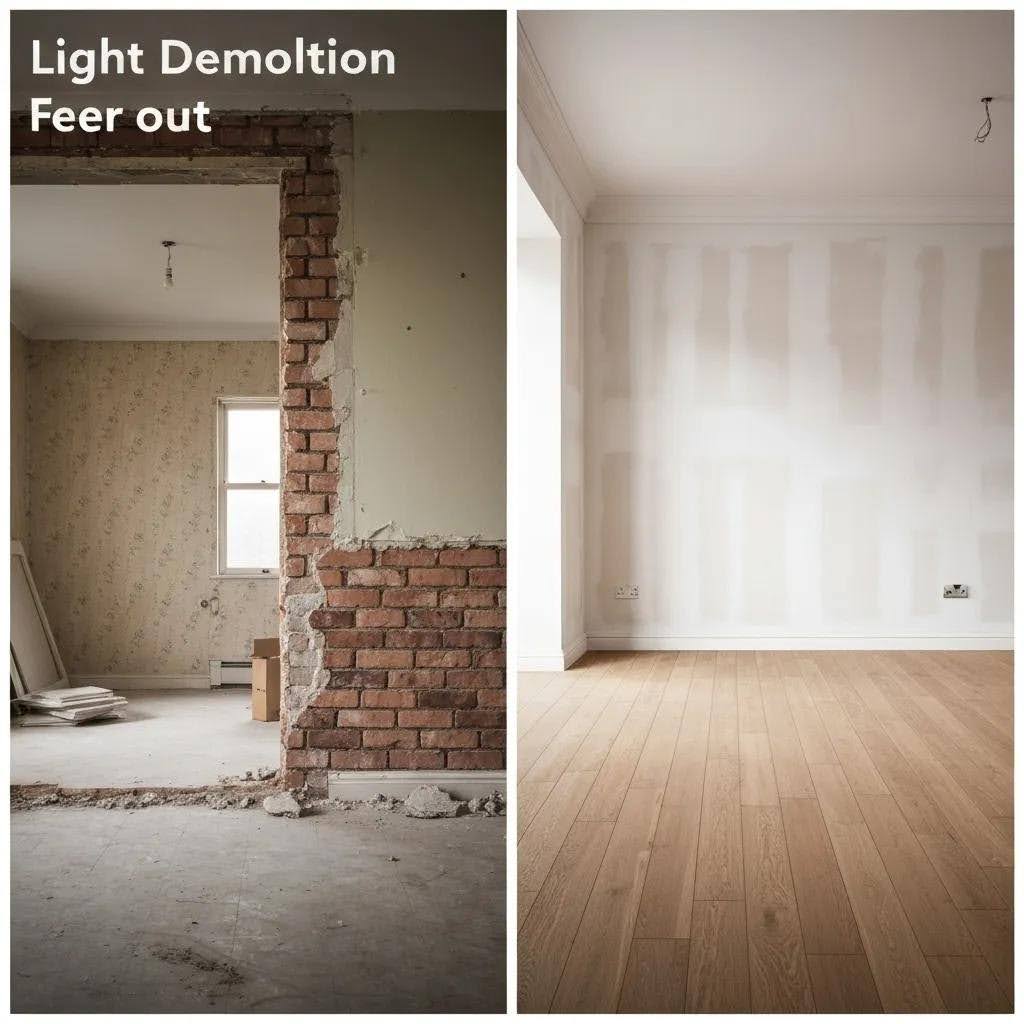
Light demolition projects typically include:
- Interior wall removal to reconp floor plans
- Flooring tear-out of tile, hardwood, or laminate
- Cabinet and countertop removal for kitchen and bathroom remodels
These applications serve residential and small commercial remodels, demonstrating how targeted deconstruction accelerates renovation timelines while preserving structural integrity.
How Does Light Demolition Support Home Renovation and Property Cleanouts?
By removing outdated finishes and fixtures, selective demolition establishes a blank canvas for design upgrades. For example, strip-out of bathroom tile and fixtures prevents water damage before installing new plumbing and finishes. In cleanouts, demolition of tired cabinetry and interior walls streamlines junk removal and property staging for sale or lease.
What Materials and Structures Are Typically Removed in Light Demolition?
Before planning your project, it helps to know common demolition elements. The table below outlines typical components, their function, and why their removal is essential.
| Component | Function | Reason for Removal |
|---|---|---|
| Drywall | Room separation and finish | To reconp layouts or address damage |
| Flooring (tile, wood) | Surface covering | To replace worn materials or change design |
| Kitchen cabinetry | Storage and countertop support | To install modern layouts or appliances |
| Bathroom fixtures | Plumbing and sanitary fittings | To upgrade fixtures or correct leaks |
| Detached sheds | Outdoor storage structures | To clear space for landscaping or rebuild |
Selective removal of these materials paves the way for efficient remodels, reducing cleanup time and avoiding structural risks.
When Should You Hire Light Demolition Services for Your Denver Property?
Identifying the right moment to engage professionals ensures smooth project flow. You should seek light demolition expertise when your renovation plans involve interior deconstruction beyond paint or minor repairs.
What Are the Common Scenarios Requiring Light Demolition?
- Home remodels needing reconpd floor plans
- Water or fire damage requiring tear-out of compromised materials
- Property cleanouts for estate sales or tenant move-outs
These situations demand safe, efficient deconstruction to prevent hidden damage and expedite subsequent construction or disposal tasks.
How Does Light Demolition Prepare Your Property for Renovation or New Installations?
Professional teams assess load-bearing elements, remove non-structural components, and protect remaining infrastructure. This process ensures proper substrate exposure for new finishes, simplifies electrical and plumbing upgrades, and prevents costly surprises once renovation begins.
What Are the Benefits of Professional Light Demolition Over DIY?
Engaging experts boosts safety, speed, and disposal compliance:
- Certified crews mitigate injury risks with proper protective gear
- Commercial-grade tools accelerate removal of cabinetry, tile, and flooring
- Licensed waste handlers guarantee responsible recycling and landfill diversion
How Much Does Light Demolition Cost in Denver?
Light demolition pricing in Denver reflects project size, material type, and debris volume. Professional quotations account for labor, disposal fees, and permit coordination to deliver transparent estimates.
What Factors Influence the Price of Light Demolition Services?
Cost drivers include:
- Project Scope – Total square footage and number of rooms
- Material Complexity – Hard-surface flooring or dense cabinetry takes longer to remove
- Debris Volume – Larger waste quantities incur higher hauling and disposal fees
How Does Residential Demolition Pricing Compare to Commercial Light Demolition?
Commercial projects often involve larger areas, stricter safety protocols, and off-hour work to minimize business disruption, increasing hourly labor and equipment costs. Residential demolition typically occurs during daylight hours with simpler permit requirements, yielding lower base rates per square foot.
Does Movely Offer Transparent Pricing and Free Estimates for Light Demolition?
Movely provides no-obligation, itemized quotes that detail labor, hauling, and disposal charges before work begins. Clients receive a clear scope of services and fixed pricing to prevent unexpected fees, supporting confident budget planning.
To request a personalized estimate, contact our team via the Contact Us – Movely page.
What Is the Step-by-Step Process of Light Demolition with Movely in Denver?
Movely’s structured approach blends expert planning and execution to streamline selective deconstruction and post-demolition cleanup.
- Initial consultation and site evaluation
- Customized project planning with timeline and permit review
- On-site demolition by trained crews
- Debris removal, recycling, and disposal
- Final walkthrough and site handover
How Does the Initial Consultation and Project Planning Work?
During consultation, Movely experts assess site conditions, identify non-structural elements for removal, confirm permit needs, and provide a detailed work plan. This blueprint clarifies scope, schedules crews, and aligns demolition activities with your renovation timeline.
What Happens During the Demolition Execution Phase?
Certified technicians isolate work areas, install dust barriers, and use industry-grade tools to dismantle drywall, cabinets, and fixtures. Structural components remain protected. Crews monitor debris containment and air quality, maintaining a controlled environment until deconstruction completes.
How Is Debris Removed and Responsibly Disposed or Recycled?
Teams segregate materials—drywall, wood, metal, concrete—and transport loads to licensed recycling centers or designated landfills. This waste management approach reduces environmental impact and upholds Denver’s sustainable building regulations.
How Does Movely Ensure Safety Throughout the Demolition Process?
Movely enforces stringent safety protocols:
- Personal protective equipment for every crew member
- Compliance with OSHA and local construction safety codes
- Regular site inspections to verify stability and hazard mitigation
These measures protect property, occupants, and crew while preserving trust in professional standards.
Which Types of Residential Light Demolition Services Does Movely Provide in Denver?
Movely specializes in tailored interior deconstruction for kitchens, bathrooms, basements, sheds, and decks. Each service focuses on safe removal, efficient debris handling, and minimal disturbance to remaining spaces.
What Does Kitchen Demolition Include and When Is It Needed?
Kitchen demolition covers:
- Cabinet and countertop removal
- Appliance disconnection and extraction
- Tile backsplash and flooring tear-out
Clients typically schedule this service when planning full kitchen remodels, layout reconfigurations, or structural updates requiring clean substrate surfaces.
How Is Bathroom Demolition Performed and What Are Its Benefits?
Bathroom deconstruction involves fixture removal, tile and plaster dismantling, and careful lift-out of built-in cabinetry. Removing outdated or water-damaged components preps floors and walls for moisture-resistant installations and modern fixture upgrades.
What Are the Key Steps in Basement Demolition for Renovation Projects?
- Removal of non-load-bearing walls to open layouts
- Extraction of concrete or tile flooring to expose foundation
- Disposal of outdated insulation and paneling
These steps establish a clear foundation for finishing systems, insulation, and new flooring installations.
When Should You Consider Shed and Deck Removal as Part of Light Demolition?
Shed or deck removal clears outdoor footprints for patio expansions, landscaping projects, or structural replacements. Professional teardown avoids property damage and ensures proper disposal of treated lumber and fasteners.
What Commercial Light Demolition Services Are Available in Denver?
Movely extends selective deconstruction to offices, retail spaces, and light industrial interiors, focusing on efficient turnover and minimal downtime for local businesses.
How Does Office and Retail Demolition Differ from Residential Demolition?
Commercial light demolition typically:
- Operates during off-peak hours to maintain business continuity
- Requires coordination with property managers and tenants
- Incorporates stricter waste diversion targets under local ordinances
These considerations ensure smooth transitions from demolition to tenant improvements or new tenant move-ins.
What Are the Benefits of Hiring Professionals for Commercial Light Demolition?
Professional teams deliver:
- Rapid turnaround to meet tight lease schedules
- Uniform safety practices compliant with building codes
- Transparent project oversight for stakeholders
By outsourcing deconstruction, businesses avoid internal disruptions and focus on core operations during property updates.
What Are the Permit Requirements and Legal Considerations for Light Demolition in Denver?
Navigating interior demolition regulations prevents delays and fines. Understanding permit requirements clarifies project scope and responsibilities.
When Are Permits Required for Interior and Light Demolition Projects?
Permits become mandatory when demolition impacts:
- Structural members or load-bearing walls
- Plumbing, electrical, or HVAC systems
- Fire-rated assemblies or fire-resistant materials
Minor cosmetic changes—like non-structural drywall removal—often proceed permit-free, but verification with local authorities is advised.
How Can Movely Assist with Navigating Denver’s Demolition Permit Process?
Movely’s permit specialists review project details, file necessary applications with the City and County of Denver, and coordinate inspections. This support prevents compliance gaps and ensures timely approvals. Learn about our company heritage and service commitments on the About Us – Movely page.
What Are the Consequences of Demolishing Without Proper Permits?
Unauthorized demolition risks include fines, stop-work orders, and potential restoration mandates. Proper permitting protects property owners from liability and aligns projects with building safety standards.
How Does Movely Handle Demolition Debris Removal and Eco-Friendly Waste Disposal in Denver?
Movely integrates demolition and junk removal services to deliver end-to-end site clearance, emphasizing sustainability and convenience for clients and the environment.
What Types of Debris Are Commonly Removed After Light Demolition?
Typical demolition waste streams include:
- Wood and cabinetry fragments
- Drywall and plasterboard
- Ceramic or concrete flooring pieces
How Does Responsible Recycling and Waste Management Benefit Clients and the Environment?
By diverting recoverable wood, metal, and gypsum board, clients reduce landfill fees and contribute to Colorado’s waste-reduction goals. This circular approach supports local recycling markets and enhances property sustainability credentials.
What Makes Movely’s Debris Removal Service Efficient and Hassle-Free?
Movely’s combined demolition and junk removal teams:
- Coordinate load scheduling to minimize truck trips
- Provide on-site roll-off containers when needed
- Offer same-day removal options for urgent turnovers
Seamless logistics free clients to focus on renovation decisions rather than waste handling.
What Are the Most Frequently Asked Questions About Light Demolition Services in Denver?
Movely addresses common client concerns to demystify demolition costs, permits, project duration, service bundling, and preparation guidelines.
How Much Does Light Demolition Cost in Denver?
Light demolition pricing varies by scope, materials, and debris volume. Movely’s free estimates deliver clear, itemized costs to fit any remodel budget.
Do I Need a Permit for Interior Demolition in Colorado?
Permit requirements depend on whether removal involves structural, plumbing, or electrical components. Minor non-structural deconstruction may not require approval, but Movely’s team confirms specifics for each project.
What Is Considered Light Demolition?
Selective removal of non-load-bearing elements—such as interior walls, flooring, cabinets, and small outdoor structures—defines light demolition. This service readies spaces for renovation or cleanout.
How Long Does a Typical Light Demolition Project Take?
Most single-room interior demolition projects complete within one to two days, depending on complexity and debris disposal logistics.
Can Movely Combine Demolition and Junk Removal Services?
Yes. Movely integrates demolition and junk removal into a single contract, streamlining site clearance and waste disposal under one trusted provider.
How Do I Prepare My Home or Business for Light Demolition?
Clearing personal items, securing valuables, and disconnecting utilities (where applicable) simplifies demolition setup. Movely provides a pre-demolition checklist to ensure a smooth start.
Removing non-structural obstacles and waste under professional care accelerates your renovation journey while upholding safety and sustainability. Partnering with Movely in Denver and surrounding Colorado communities secures expert demolition support, efficient debris removal, and confidence that every permit and environmental standard is met. Reach out today to schedule your consultation and take the first step toward a successful remodel.
Conclusion
Engaging professional light demolition services in Denver streamlines your renovation process while ensuring safety and compliance with local regulations. By choosing Movely, you benefit from expert support, efficient debris removal, and a commitment to eco-friendly practices. Don’t leave your project to chance; contact us today to schedule your consultation and discover how we can help you achieve your renovation goals. Experience the difference that professional demolition can make for your property.